Why a conical ribbon blender Might Just Save Your Production Line
Having spent the better part of a decade around industrial mixing equipment, I can say the conical ribbon blender is one of those unsung heroes of process engineering. You don’t often see it getting the spotlight: it’s subtle, no flashy buttons or digital displays, but it’s got an elegance that’s hard to beat when things need to be mixed efficiently and gently. Oddly enough, the first time I got to really test one on-site, I was surprised just how cleanly it handled tricky powders – no clumps, no dead zones. Makes you appreciate good engineering.
In real terms, a conical ribbon blender consists of a cone-shaped vessel fitted with an agitator that spins to mix materials inside. This design helps products flow downward and then back up in a spiral fashion, promoting uniform mixing. Many engineers I know swear by it for powders, granular products, and even delicate dry blends. There’s a nice balance between speed and care—perfect if you’re working with abrasive or fragile ingredients.
The materials used in manufacturing these blenders also get my nod of approval. Stainless steel is king, naturally, especially food-grade 304 or 316 variants that resist corrosion and make sanitation straightforward. You’ll sometimes see customized coatings, but frankly, unless you’ve got a corrosive process specifically, the steel alone does a great job standing the test of time and chemical exposure.
| Feature | Details |
|---|---|
| Capacity | 50 to 5,000 liters |
| Material | Stainless steel 304/316 |
| Drive System | Variable speed motor, gear reducer |
| Cleaning | CIP (Clean-in-Place) compatible |
| Customization | Optional jackets, automation controls |
Customization options can be a real game-changer, especially if your product requires temperature control during mixing. Jackets for heating or cooling fluids are pretty common, and adding automation can save your operators from manual guesswork. I once worked with a client who retrofitted one of these blenders with temperature sensors and PLC controls—it was charming to see how much tighter their batch consistency became.
That said, not all conical ribbon blenders are made equal. If you’re weighing vendors, here’s a quick snapshot that I found helpful when comparing some of the more popular options out there:
| Vendor | Capacity Range | Material | Lead Time | Price Level |
|---|---|---|---|---|
| Vendor A | 100 - 3,000 L | 304 Stainless Steel | 4-6 weeks | $$ |
| Vendor B | 50 - 5,000 L | 316 Stainless Steel | 6-8 weeks | $$$ |
| Vendor C | 200 - 4,000 L | 304 Stainless Steel | 3-5 weeks | $ |
Personally, if lead time is tight, you might lean toward something like Vendor C, though you’ll want to double-check their warranty and after-sales service. I suppose it always comes down to what your process prioritizes—fast delivery or premium materials.
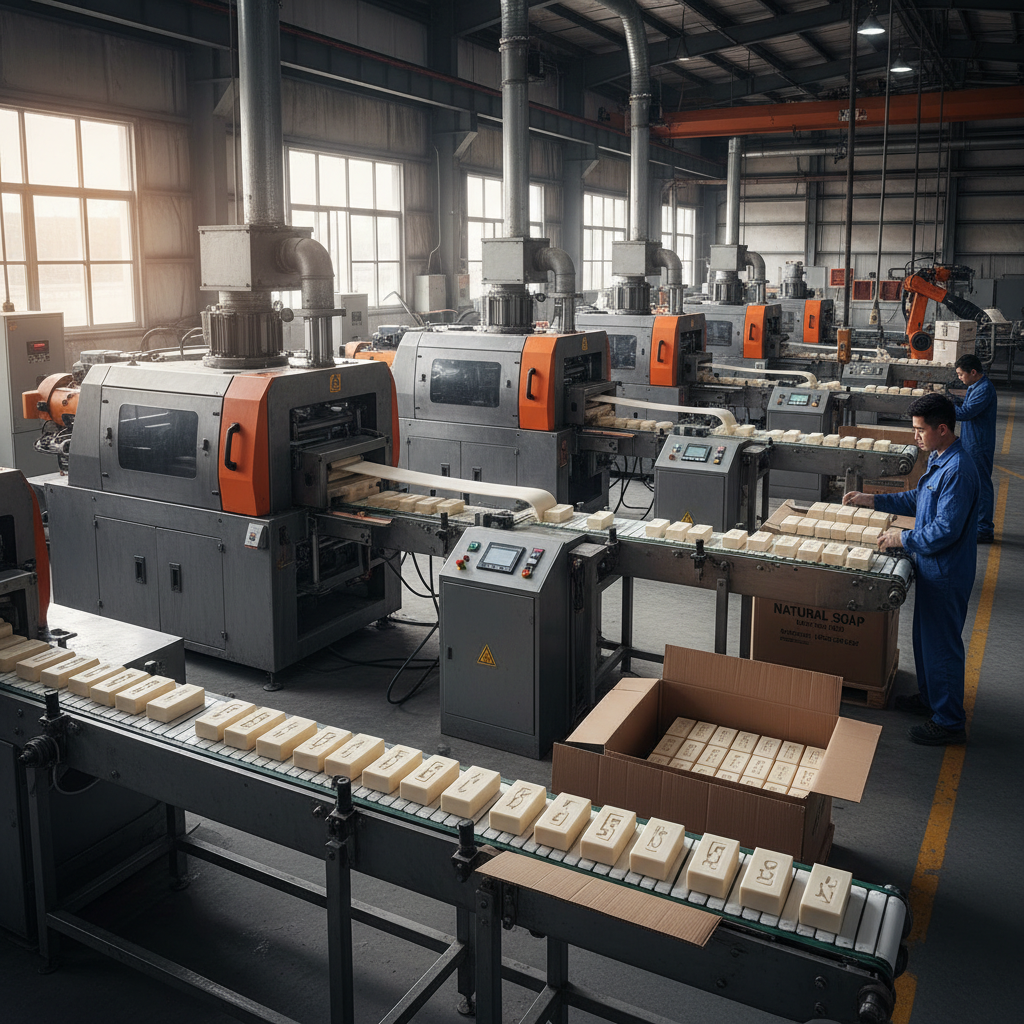
One story that sticks with me is when a mid-sized soap manufacturer upgraded to a conical ribbon blender after struggling with inconsistent batches in their older paddle mixers. Within weeks, their batch uniformity increased substantially, and downtime for cleaning halved thanks to CIP compatibility. They told me it “felt like a breath of fresh air” compared to what they had before—which, frankly, is a rare sentiment in heavy industry.
In the end, if you’re in the market for a reliable mixing solution, the conical ribbon blender deserves a hard look. It combines efficiency, durability, and flexibility—qualities that rarely coincide without compromise.
Takeaway: a well-made conical ribbon blender is a steady workhorse you’ll come to rely on—and that’s the kind of tool that quietly makes everything better.
References:
1. “Mixing Technology Handbook,” Process Equipment Specialists, 2021.
2. “Material Handling & Processing,” Industrial Machinery Review, Issue 34, 2023.
3. RS Soap Machine official site (https://www.rssoapmachinery.com)