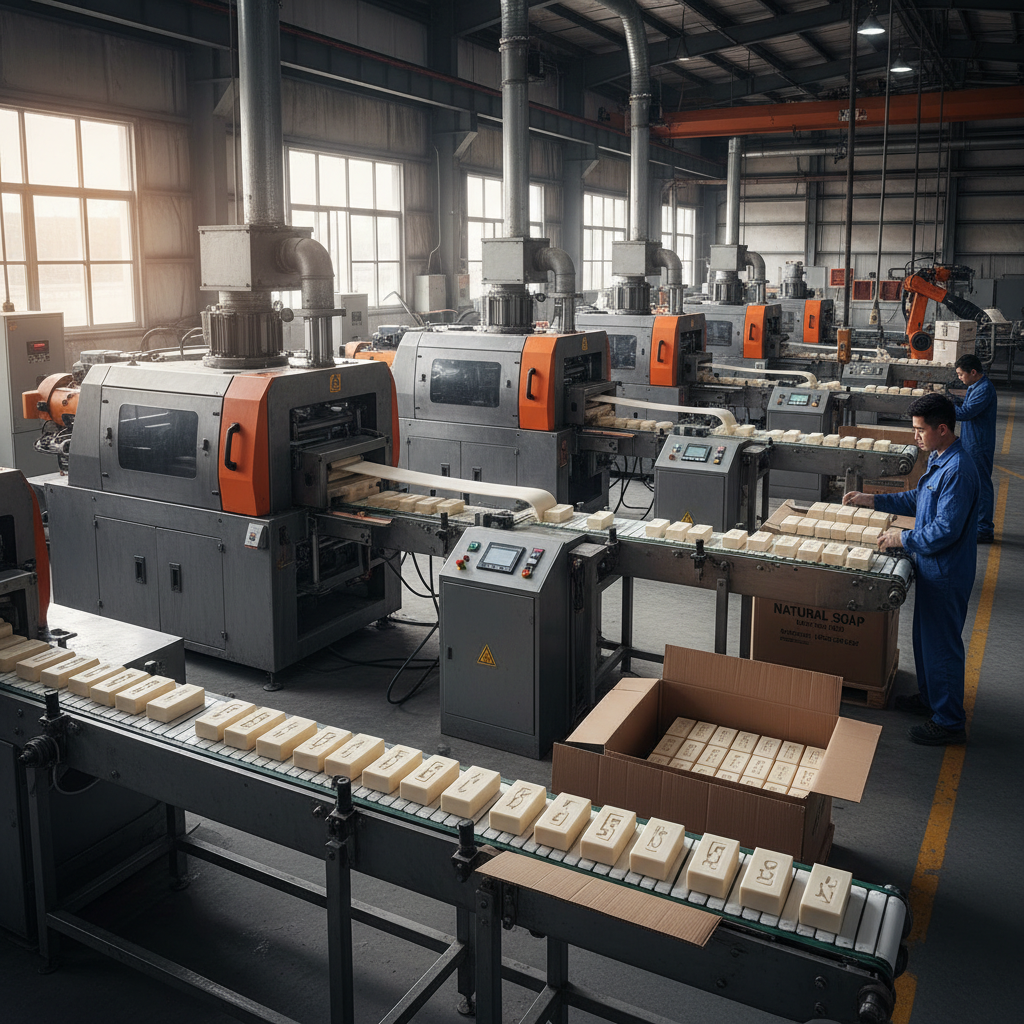
Understanding the Critical Role of a Liquid Detergent Mixer
Liquid detergent mixer technology, honestly, isn’t something many people think about. But in the world of large-scale detergent manufacturing – and a surprising number of adjacent industries, like industrial cleaners and even some cosmetic formulations – it's absolutely fundamental. It’s the workhorse that ensures consistent product quality, reduces waste, and frankly, keeps production lines running smoothly. We at rssoapmachine.com have been focusing on this for a while now, and it’s fascinating to see how much the technology has evolved. I suppose the demand is driven by the ever-increasing need for efficiency in production.
Table of Contents
- Liquid Detergent Mixer Overview
- Benefits & Use Cases of Liquid Detergent Mixer
- Cost, Maintenance & User Experience
- Sustainability & Market Trends
Liquid Detergent Mixer Overview
A liquid detergent mixer, at its core, is designed to homogeneously blend multiple liquid components – surfactants, builders, enzymes, fragrances, you name it – into a finished detergent product. The design varies, of course, but the common goal is to achieve a uniform mixture without introducing air bubbles or damaging sensitive ingredients. Many older systems relied on simple impeller designs, but modern mixers increasingly use static mixers, or combinations of impellers and stators, to create more turbulent flow and efficient blending. We've seen a shift towards stainless steel 316L construction for enhanced corrosion resistance, especially with the increasingly complex formulas being used. Here’s a snapshot of a typical specification:
| Parameter | Specification | Notes |
|---|---|---|
| Tank Volume | 500 – 10,000 Liters | Customizable |
| Material | 316L Stainless Steel | Corrosion Resistant |
| Mixing Speed | Variable, 0-150 RPM | Adjustable |
Benefits & Use Cases of Liquid Detergent Mixer
The applications are really quite broad. Obviously, laundry detergents are a primary one. But think about dish soaps, industrial degreasers, even some automotive fluids – they all require precise mixing. What I’ve noticed is that the demand for mixers capable of handling highly viscous fluids is rising. Many companies are moving toward concentrated formulations to reduce shipping costs, and that requires more powerful and sophisticated mixing systems. A key advantage, beyond consistent quality, is reduced waste. A properly mixed batch means fewer rejects and optimized ingredient utilization. And, honestly, a good mixer can significantly reduce production time.
Here’s a quick comparison with some of our competitors:
| Feature | RS Soap Machine | Competitor A | Competitor B |
|---|---|---|---|
| Material Quality | 316L Stainless Steel | 304 Stainless Steel | 304 Stainless Steel |
| Customization Options | Extensive | Limited | Moderate |
| Warranty | 2 Years | 1 Year | 1 Year |
Cost, Maintenance & User Experience
Okay, cost is always a big consideration. Frankly, the initial investment can be significant, but you really have to look at the total cost of ownership. A higher-quality mixer, like ours, will require less maintenance and have a longer lifespan. We design our mixers for easy cleaning and maintenance; most components are readily accessible. I recall one customer, a mid-sized industrial cleaner manufacturer, who told us they’d reduced their downtime by 15% simply by switching to our system. Many engineers say that the intuitive controls and user-friendly interface are a huge plus. It feels like a small thing, but it makes a real difference on the production floor.
Sustainability & Market Trends
There's a growing emphasis on sustainability in the detergent industry, which is driving demand for mixers that can handle bio-based and biodegradable ingredients. Regulations around chemical usage are also getting stricter, pushing manufacturers to optimize their formulations and reduce waste – which, again, highlights the importance of efficient mixing. I suppose the trend toward concentrated formulas is also related, and it's something we’re actively addressing with our latest mixer designs. The market is definitely moving towards more efficient, reliable, and environmentally friendly solutions.
Frequently Asked Questions about Liquid Detergent Mixer
- What is Liquid Detergent Mixer and how does it work?
- A Liquid Detergent Mixer blends liquid ingredients to create a homogenous mixture. It uses impellers, stators, or a combination of both, to generate turbulent flow and ensure uniform blending without air incorporation.
- What are the main benefits of using Liquid Detergent Mixer in industrial applications?
- Key advantages include consistent product quality, reduced waste, increased production efficiency, and the ability to handle diverse and viscous formulations.
- How does Liquid Detergent Mixer compare to traditional alternatives?
- Modern Liquid Detergent Mixers offer superior mixing efficiency, precise control, and reduced energy consumption compared to older impeller-based systems.
- What industries can benefit most from Liquid Detergent Mixer implementation?
- Industries like laundry detergent manufacturing, industrial cleaning, dish soap production, and automotive fluid formulation can all significantly benefit from implementing Liquid Detergent Mixers.
Conclusion on Liquid Detergent Mixer from china
Ultimately, a high-quality liquid detergent mixer is an investment in efficiency, consistency, and long-term cost savings. Don't underestimate its impact on your overall production process. Visit our website: https://www.rssoapmachinery.com to explore our range of solutions.
- Don’t skimp on mixing – it’s the foundation of a quality product.