THE BUYER'S GUIDE / SELECTION
Choosing a Twin Screw Granulator: Application Fit and Specification Checks
A twin screw granulator suits manufacturers who need consistent, uniform particle size across soap, plastics, pharmaceutical, and food applications. This guide walks buyers through the key selection criteria — from material compatibility and throughput requirements to footprint constraints — and explains how the confirmed specifications of the Ruisheng Twin-screw Granulator map to those criteria.

Throughput capacity: match the machine's 1,000–2,000 kg/hour rated output to your required production volume with an appropriate margin.
Material compatibility: confirm the material's abrasiveness, temperature sensitivity, and moisture content are suitable for twin-screw granulation processing.
Power supply: verify the 15 kW motor requirement matches available facility electrical supply (voltage, phase, amperage).
Physical footprint: confirm the 2,600 × 900 × 1,200 mm dimensions and 1,200 kg weight fit the available floor area and load-bearing capacity.
Line integration: check that infeed and discharge interfaces are compatible with adjacent upstream (drying/mixing) and downstream (extrusion/packaging) equipment.
Particle size uniformity: assess whether the machine's output consistency meets the tolerance requirements of your downstream process.
What Is a Twin Screw Granulator?
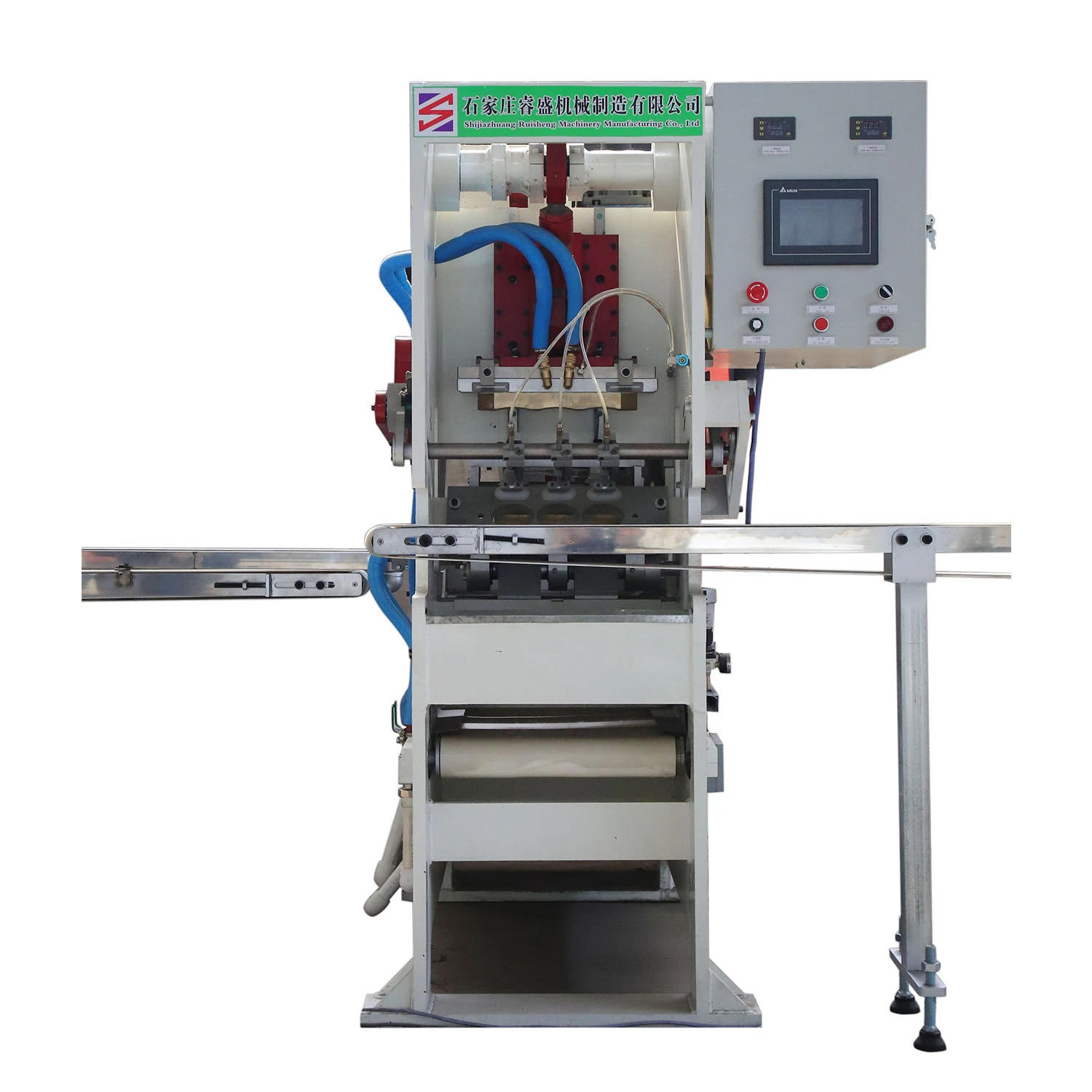
A twin screw granulator uses two intermeshing co-rotating screws to reshape bulk materials into consistently sized particles. The screw design delivers strong shear and mixing action, making it well suited to materials that need thorough blending before being formed into uniform granules.
Shijiazhuang Ruisheng Machinofacture Co., Ltd manufactures a Twin-screw Granulator designed to handle the demanding throughput and consistency requirements found in soap production, plastics processing, pharmaceuticals, and food manufacturing.
Who Actually Needs This Machine?
Before evaluating specifications, buyers should confirm whether their process requires granulation:
- Soap producers preparing dried soap base for extrusion and stamping need uniform granules to obtain smooth, consistent finished bars.
- Plastics and polymer processors use granulated feedstock to ensure predictable flow in injection molding, film extrusion, and sheet production.
- Pharmaceutical and food manufacturers rely on controlled granulation to maintain dosage accuracy and ingredient uniformity in the final product.
If your process sits outside these categories, a different size-reduction or mixing machine may be more appropriate.
Key Selection Criteria
1. Throughput Capacity vs. Your Production Volume
Match the machine's output rate to your line demand. The Ruisheng model is rated at 1,000–2,000 kg/hour. Compare this range against your required shift output and factor in planned production growth. Oversizing adds unnecessary capital cost; undersizing creates a bottleneck.
Practical check: Calculate your required hourly output (total daily target ÷ available run hours) and confirm the rated range covers that figure with a reasonable margin.
2. Material Compatibility
The co-rotating screw design handles a wide variety of materials, including soap bases, polymer resins, and food-grade or pharmaceutical powders. Buyers should also verify:
- Whether the material is abrasive or corrosive, which affects barrel and screw wear life.
- Temperature sensitivity — certain polymers or active ingredients require controlled processing temperatures.
- Moisture content, since wet and dry processes place different demands on screw geometry.
Confirm these material properties with the manufacturer before finalising the specification.
3. Power Supply and Energy Budget
The unit runs on a 15 kW motor. Verify that this matches the electrical supply at your facility (voltage, phase, and amperage). Energy consumption also feeds into operating-cost calculations, especially for multi-shift facilities.
4. Footprint and Installation Space
Overall dimensions are 2,600 × 900 × 1,200 mm and the machine weighs 1,200 kg. Before ordering, confirm:
- Available floor space, including maintenance clearance around all sides.
- Floor load-bearing capacity for the machine weight.
- Proximity to upstream drying or mixing equipment and downstream extrusion or packaging lines.
5. Integration with Adjacent Equipment
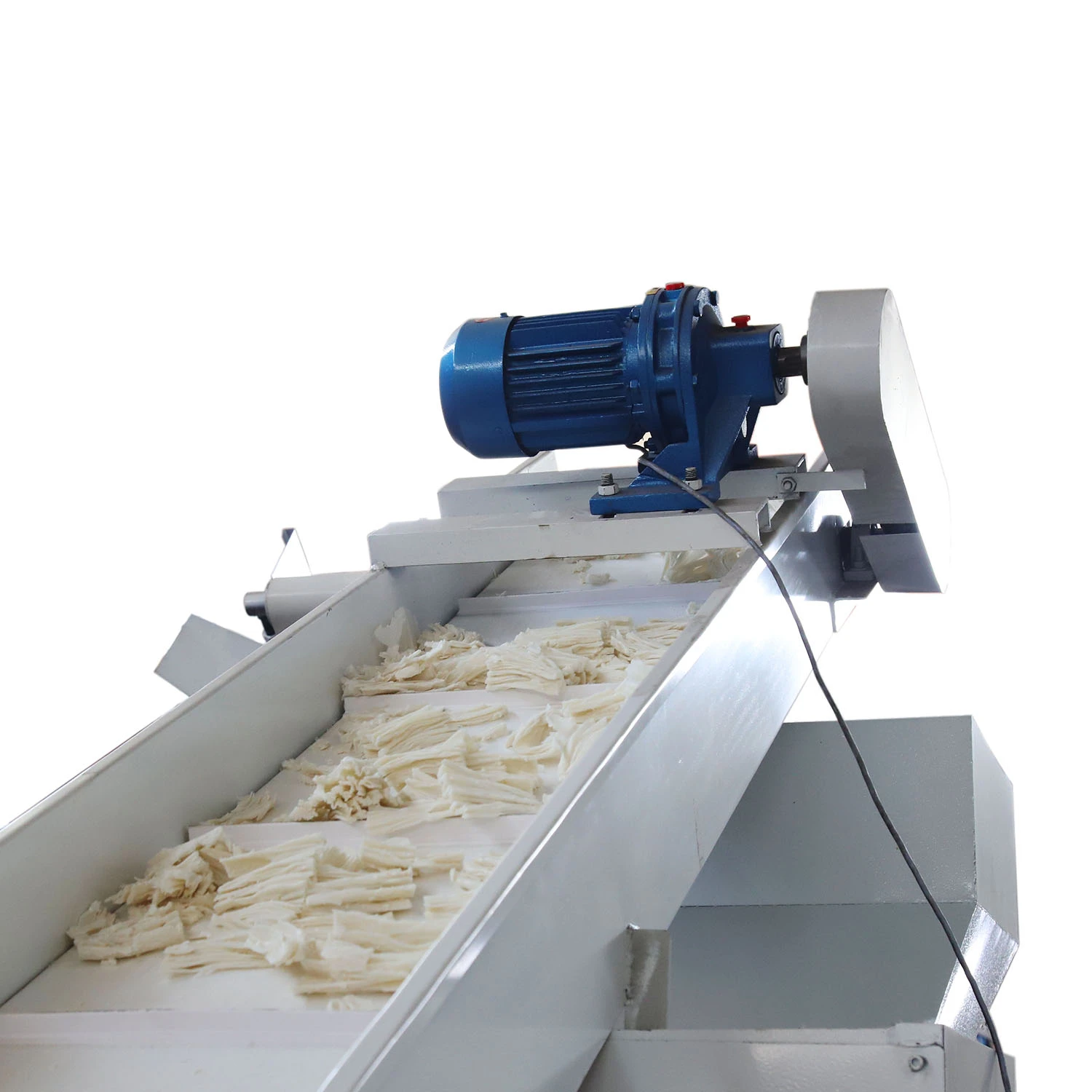
In soap production lines, this granulator sits between the drying stage and the extrusion or stamping stage. In plastics lines it feeds directly into molding or extrusion equipment. Confirm that infeed hopper height, discharge chute position, and conveyor interfaces are compatible with your other machines before ordering.
6. Particle Size Consistency Requirements
Producing uniform particle size is a core function of this machine, and it directly affects downstream quality — consistent bar weight in soap stamping, reliable melt flow in plastics, or accurate dose delivery in pharmaceuticals. Buyers with tight particle-size tolerances should request technical data on granule size distribution from the manufacturer.
Specification Summary
| Parameter | Ruisheng Twin-screw Granulator |
|---|---|
| Working Efficiency | 1,000–2,000 kg/hour |
| Motor Power | 15 kW |
| Overall Dimensions | 2,600 × 900 × 1,200 mm |
| Weight | 1,200 kg |
Specifications are sourced from the confirmed product description. Request a formal datasheet to verify all parameters before purchase.
Documented Application Areas
Based on confirmed product materials, the Ruisheng machine is suited for:
- Soap production — converting dried soap base into granules ready for extrusion and stamping.
- Plastics and polymer processing — preparing raw materials for film, sheet, and injection-molded products.
- Pharmaceutical manufacturing — controlled granulation for dosage accuracy.
- Food manufacturing — granulation for uniformity in final food products.
What This Guide Does Not Cover
Pricing, lead times, export certifications, and after-sales service terms are not addressed here because no confirmed material is available for those topics. Buyers should request a formal quotation and technical proposal directly from the manufacturer.
Conclusion
Selecting the right granulation machine comes down to matching throughput, motor power, physical footprint, and material compatibility to your actual production conditions. Rated at 1,000–2,000 kg/hour with a 15 kW motor, the Ruisheng Twin-screw Granulator is designed for flexible use across soap, plastics, pharmaceutical, and food applications. Use the six criteria above as a structured checklist when comparing options and preparing questions for your supplier.
THE PEOPLE

About the author
THE COMPANY
Shijiazhuang Ruisheng Machinofacture Co., Ltd
The machinery factory of Shijiazhuang Ruisheng Machinery Manufacturing Co., Ltd., located in Shijiazhuang City, Hebei Province, is an outstanding representative in the field of machinery manufacturing. The machinery factory of Shijiazhuang Ruisheng Machinery Manufacturing Co., Ltd., located in Shijiazhuang City, Hebei Province, is an outstanding representative in the field of machinery manufacturing.…
About Us ↗Visit company website ↗YOUR NEXT STEP
Bring your brief. Start a useful conversation.
Use case, specification, quantity and delivery window: make the next conversation specific.