When evaluating the initial investment for a soap production facility, the single screw extruder price often emerges as a pivotal variable that dictates the overall scalability of the operation. For manufacturers in the specialized daily chemical equipment sector, the extruder is not merely a pump but the heart of the molding process, responsible for transforming raw soap noodles into a consistent, pressurized mass ready for shaping. Understanding the cost drivers behind this machinery requires a deep dive into material science and mechanical precision.
The financial commitment associated with this equipment directly impacts the efficiency of Soap And Soap Molding Production Line setups. A low-cost entry might seem attractive, but in the context of industrial output, the relationship between the purchase price and the long-term operational cost is critical. Factors such as screw geometry, heating zone accuracy, and motor torque determine whether a machine minimizes waste or becomes a bottleneck in the production of high-quality soap bars.
Navigating the complexities of procurement involves balancing technical specifications with budget constraints to ensure a sustainable return on investment. This guide analyzes the technical components and market variables that influence single screw extruder price, providing a professional framework for buyers to assess value beyond the sticker price and integrate these systems effectively into their granulation or molding lines.


At its most fundamental level, the single screw extruder utilizes a rotating screw within a heated barrel to convey, compress, and homogenize soap mass. This process is critical for removing air pockets and ensuring that the soap noodles are fully integrated into a plasticized state. The mechanical interaction between the screw flight and the barrel wall creates the necessary shear force to maintain a uniform temperature throughout the material, which is essential for subsequent molding or cutting phases.
The precision of the screw's pitch and the quality of the barrel's internal finish are what define the machine's efficiency. In high-end manufacturing, CNC machining centers are used to ensure that tolerances are kept to a minimum, reducing leakage and maximizing the pressure applied to the soap mass. This structural integrity ensures that the extruder can handle the high viscosity of soap without excessive motor strain, maintaining a steady flow rate for the production line.
The pricing of a single screw extruder is primarily influenced by the grade of materials used in the construction of the screw and barrel. High-chromium steels or specialized alloys are often employed to resist the abrasive nature of soap ingredients and prevent corrosion. The cost of these raw materials, combined with the heat treatment processes required to harden the surfaces, creates a baseline price that varies significantly between entry-level and industrial-grade machinery.
The true value of an extruder is found in its thermal control system; precise PID controllers and high-efficiency heating bands prevent "burning" the soap mass, which directly reduces raw material waste by up to 5% in high-volume environments.
Additionally, the motor and gearbox configuration contributes heavily to the final cost. A motor with a high starting torque and a gearbox designed for continuous heavy-duty cycles ensures that the machine does not overheat during 24/7 operations. When buyers analyze pricing, they must consider whether the machine includes automated feeding systems or advanced synchronization capabilities that allow it to work in tandem with cutting machines or automatic printers.
Evaluating the return on investment for an extruder requires looking beyond the initial acquisition cost. A machine with superior mechanical precision reduces the frequency of screw replacements and barrel re-boring, which are the most common maintenance expenses in soap production. By focusing on the lifecycle cost, manufacturers can identify that a slightly higher initial investment often leads to lower monthly operating expenses due to reduced energy consumption and less downtime.
Reliability in the extrusion phase prevents downstream failures. If the extruder produces an inconsistent mass, the subsequent molding or printing processes will suffer from variability in soap bar weight and surface quality. Therefore, the value of a high-precision extruder is measured by the decrease in rejected product and the increase in the final appeal of the soap bars, directly impacting the brand's market competitiveness.
In a professional soap manufacturing environment, the extruder serves as the bridge between the refining stage and the shaping stage. In a typical Soap Granulation Production Line, the extruder is used to force the soap mass through a die to create continuous strands that are later granulated. This requires a machine capable of maintaining extremely high and stable pressure to ensure the granules are uniform in size and density, which is critical for the quality of the final product.
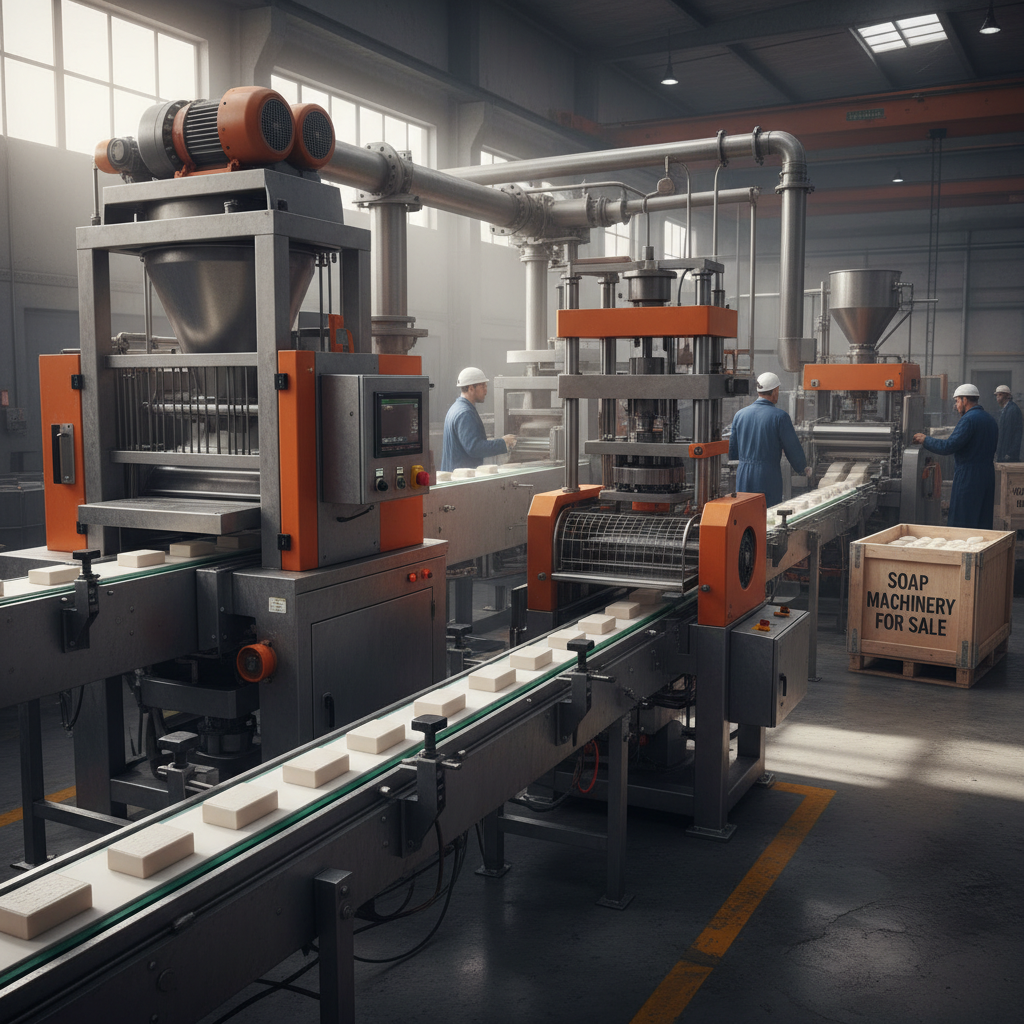
For those focusing on bar soap, the extruder feeds the molding machines. Here, the priority shifts to temperature homogeneity. If the mass is too hot, the bars may deform; if too cold, they will not fill the molds completely. The ability of the extruder to synchronize its output with the speed of a soap printer—such as those capable of 70 cycles per minute—is what allows a factory to achieve a seamless, high-speed production flow without manual intervention.
The industry is moving toward "intelligent extrusion," where sensors are integrated directly into the barrel to monitor the viscosity and temperature of the soap mass in real-time. This allows the system to automatically adjust screw speed and heating levels, removing the reliance on manual operator experience and ensuring a consistent product regardless of slight variations in the raw soap noodle quality.
Energy efficiency is also becoming a primary driver of innovation. New designs focusing on optimized heating zones and high-efficiency motors are reducing the carbon footprint of daily chemical plants. As environmental regulations tighten, the demand for machinery that produces less waste and consumes less electricity is likely to drive a shift toward more complex, yet more efficient, extruder designs.
Furthermore, the integration of modular components is allowing factories to scale their production lines more flexibly. Instead of replacing an entire line, manufacturers can now upgrade specific modules of their extrusion and molding systems to increase capacity or adapt to new product specifications, such as changing soap bar weights from 100g to 250g without significant downtime.
One of the most common challenges in deploying a new extruder is ensuring compatibility with existing conveyor systems and molding equipment. A mismatch in output pressure or temperature can lead to material buildup or gaps in the production line. To solve this, buyers should prioritize suppliers who provide customized solutions and technical support for the entire production line rather than purchasing isolated components.
Another critical consideration is the training of technical personnel. While modern machines are more automated, the initial setup and calibration of the extrusion process require a deep understanding of the material's behavior. Establishing a partnership with a manufacturer that provides comprehensive installation guides and technical training is essential for maximizing the machine's lifespan and efficiency.
Finally, procurement should be based on a holistic evaluation of the supplier's capabilities. Factors such as the availability of spare parts, the precision of the CNC machining used in production, and the company's experience in exporting to diverse markets ensure that the equipment will be supported throughout its operational life, reducing the risk of prolonged outages.
| Production Scale | Material Priority | Automation Level | Key Value Metric |
|---|---|---|---|
| Small Scale | Standard Steel | Manual/Semi-Auto | Low Entry Cost |
| Medium Scale | Hardened Alloy | PID Control | Consistency |
| Large Industrial | High-Cr Steel | Fully Automated | Max Throughput |
| Specialized Soap | Corrosion Resistant | Precision Temp | Product Purity |
| Export Grade | Certified Alloys | Synchronized | Regulatory Compliance |
| High-Speed Lines | Wear-Resistant | PLC Integration | Cycle Time |
The price is primarily driven by the quality of the screw and barrel materials, the precision of the machining (such as CNC accuracy), and the sophistication of the thermal control system. High-grade alloys that resist wear and corrosion, combined with advanced PID temperature controllers and high-torque motors, increase the cost but significantly lower the long-term operational expense through reduced maintenance and material waste.
The extruder is responsible for homogenizing the soap mass and removing air. If the extrusion is inconsistent, the soap bars may have air bubbles, uneven weights, or surface defects. A high-precision extruder ensures a uniform plasticized state, which allows molding machines and soap printers to operate with maximum precision, resulting in a professional finish and consistent brand appearance.
Yes, but it requires careful synchronization of the output flow rate and pressure. The extruder must be matched with the capacity of the preceding refining machines and the succeeding granulation equipment. Professional suppliers typically offer customized solutions to ensure that the screw speed and die size are optimized for the specific mass flow of the existing production line to avoid bottlenecks.
Maintenance cycles depend on the soap formula and production volume. Generally, screw and barrel wear should be inspected every 6 to 12 months. Regular lubrication of the gearbox and calibration of the heating bands are required monthly. Using high-chromium steels in the construction of the screw can extend the replacement interval significantly compared to standard carbon steel options.
For most industrial operations, a complete production line is preferable because it ensures all components—from the sigma kneader to the automatic printer—are engineered to work together. This eliminates integration risks and ensures that the extruder's output perfectly matches the input requirements of the molding machines, leading to higher overall efficiency and easier technical support.
Precise temperature control reduces the percentage of "burnt" or wasted soap mass and ensures a consistent viscosity. In high-volume production, reducing waste by even 2-3% can save thousands of dollars in raw materials annually. Therefore, investing in a machine with superior thermal stability provides a faster ROI by lowering the cost per unit produced.
Selecting the right extrusion equipment requires a shift in perspective from viewing the single screw extruder price as a simple expense to seeing it as a strategic investment in production stability. The interplay between material durability, thermal precision, and mechanical synchronization determines the throughput and quality of the entire soap production line. By prioritizing these technical fundamentals, manufacturers can avoid the hidden costs of downtime and product variability.
For those seeking to optimize their soap manufacturing capabilities, partnering with an experienced manufacturer ensures that the equipment is tailored to specific production goals. Whether upgrading a single component or designing a full-scale granulation line, professional technical support is the key to sustainable growth. For detailed technical specifications and customized quotations, we invite you to explore the solutions available at https://www.rssoapmachinery.com.