In the demanding environment of agricultural machinery and industrial fluid management, the cost of fuel contamination remains a critical operational risk. Many fleet managers and operators frequently research the tractor water separator price not merely as a procurement cost, but as an investment in engine longevity and downtime prevention.
The challenge lies in the fact that water in fuel systems leads to corrosion, microbial growth, and catastrophic injector failure. While a separator is a standard component, the variance in pricing often reflects differences in filtration efficiency, housing durability, and the capacity to handle high-flow rates under extreme thermal conditions.
This technical analysis explores the factors influencing the valuation of fluid separation systems and how stabilization vessels, such as buffer tanks, play a complementary role in ensuring steady flow and quality in industrial production lines.


Most separators operate on the principle of coalescing, where small water droplets are forced to merge into larger drops that then settle at the bottom of the vessel due to gravity. The efficiency of this process is governed by the media density and the flow velocity.
In complex production environments, this logic extends to the use of stabilizing vessels. A buffer tank, for instance, compensates for flow fluctuations and maintains steady output, ensuring that downstream equipment receives a consistent supply without surges.
When evaluating the tractor water separator price, buyers must look beyond the initial cost and examine the micron rating of the filtration media. A lower micron rating generally increases the price but provides superior protection against fine particulate matter and emulsified water.
Material selection also significantly impacts the price. High-grade aluminum or stainless steel housings are preferred for their corrosion resistance, especially in environments exposed to salt or caustic chemicals, whereas plastic housings are used for lower-duty applications.
Furthermore, the inclusion of integrated water-in-fuel (WIF) sensors adds to the cost but provides critical real-time telemetry, allowing operators to drain the separator before water reaches the high-pressure pump.
The primary engineering conflict in separation systems is the balance between filtration efficiency and pressure drop. Increasing the density of the coalescing media improves water removal but increases the resistance to fuel flow.
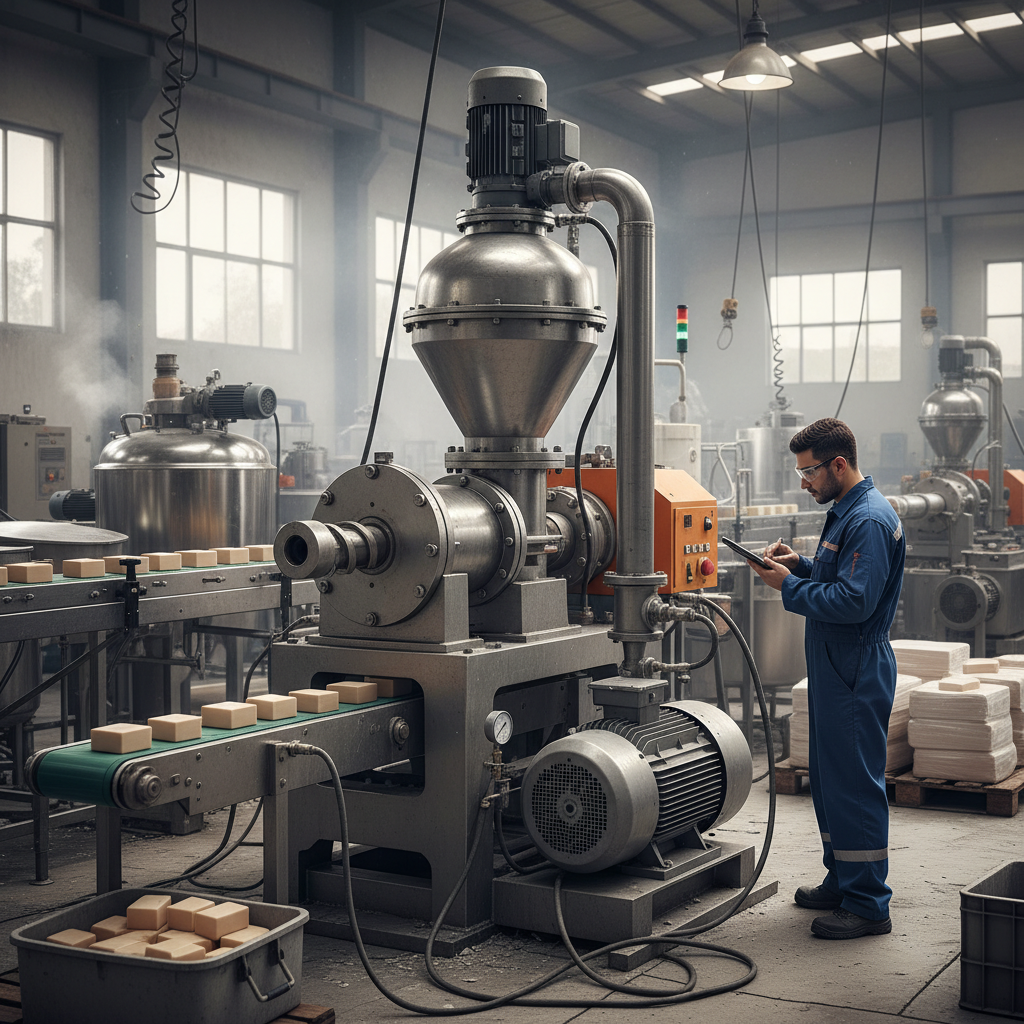
This balance is mirrored in industrial soap production lines, where buffer tanks are strategically placed to minimize disruptions caused by variable inflows, acting as an intermediate storage unit to maintain system equilibrium.
The following data represents a normalized engineering assessment of different separation technologies. These ratings consider the trade-off between initial tractor water separator price and long-term operational reliability.
Higher scores in the "Reliability" and "Efficiency" categories typically correlate with a higher purchase price but result in lower total cost of ownership (TCO) over the machine's lifecycle.
Integrating a separation system requires a deep understanding of the entire fluid path. In a representative engineering scenario, the separator must be placed upstream of all other filtration stages to remove the bulk of the water, thereby extending the life of the finer secondary filters.
This logic is critical in large-scale manufacturing, such as the soap production lines managed by Shijiazhuang Ruisheng Machinery Manufacturing Co., Ltd. In these systems, components like buffer tanks are utilized to maintain a consistent supply of soap base or liquid mixtures, ensuring that downstream processes are not affected by supply volatility.
The industry is shifting toward "smart filtration," where sensors monitor the pressure differential across the filter element in real-time. This allows for predictive maintenance, replacing elements based on actual condition rather than fixed time intervals.
We are also seeing a rise in multi-stage centrifugal separation, which reduces the reliance on disposable paper elements. While this increases the initial tractor water separator price, it significantly reduces the environmental impact and long-term consumable costs.
Furthermore, the integration of AI-driven diagnostics will soon allow systems to distinguish between simple contamination and critical system leaks, providing operators with precise troubleshooting data.
Choosing the correct separator involves mapping the application profile against the available technical configurations. A basic agricultural tractor may only require a gravity-settling bowl, whereas a heavy-duty industrial machine needs a high-efficiency coalescer.
The table below provides a framework for evaluating different configuration types based on typical engineering requirements.
Buyers should align their choice with the specific environmental stressors of their operating site, such as humidity levels and fuel quality.
| Configuration Profile | Filtration Level | Operating Factor | Recommended Use Case |
|---|---|---|---|
| Basic Configuration | Coarse (30μm+) | Low Pressure | Light Duty Tractors |
| Standard Configuration | Medium (10-20μm) | Moderate Flow | General Agriculture |
| High-Duty Configuration | Fine (5-10μm) | High Flow Rate | Industrial Heavy Machinery |
| Precision Configuration | Ultra-Fine (<5μm) | Stable Pressure | Common Rail Diesel Engines |
| Automated Configuration | Variable | Sensor-Driven | Fleet Management Systems |
| Industry Baseline | Standardized | Nominal | General OEM Requirements |
The price is primarily driven by the quality of the coalescing media, the material of the housing (e.g., aluminum vs. plastic), and the inclusion of electronic sensors for water detection. Higher efficiency ratings for water removal typically command a premium due to the advanced materials required to achieve finer separation.
Not necessarily. The "best" separator is one that matches the engine's flow requirements without creating an excessive pressure drop. An overly restrictive high-end filter can starve the engine of fuel during peak loads, leading to performance loss and potential pump damage.
While a standard filter removes solid particulates, a water separator specifically uses coalescing technology to remove liquid water from the fuel. It is designed to allow water to settle in a collection bowl for manual or automatic draining, whereas a standard filter may simply become saturated and clog.
Draining frequency depends on fuel quality and environmental humidity. In high-moisture environments, daily checks are recommended. For systems with WIF sensors, the separator should be drained immediately upon the trigger of the alert to prevent water from entering the secondary filtration stage.
Yes, the principles of fluid separation are widely used in industrial contexts. For example, in chemical or soap manufacturing, stabilizing vessels like buffer tanks are used to manage flow and quality, similar to how a separator manages fuel purity before it reaches a combustion engine.
Focus on the micron rating, housing durability, and compatibility with your current fuel pump's pressure limits. Ensure the new unit provides an easy-drain valve and, if possible, a transparent bowl for visual inspection of accumulated water.
The analysis of the tractor water separator price reveals that the most cost-effective solution is rarely the cheapest. By prioritizing coalescing efficiency and housing durability, operators can significantly reduce the risk of catastrophic engine failure and long-term maintenance costs.
Whether managing a fleet of agricultural tractors or overseeing complex production lines with stabilizing equipment like a buffer tank, the core engineering goal remains the same: ensuring a consistent, pure, and stable flow of materials to protect downstream assets and maximize operational uptime.