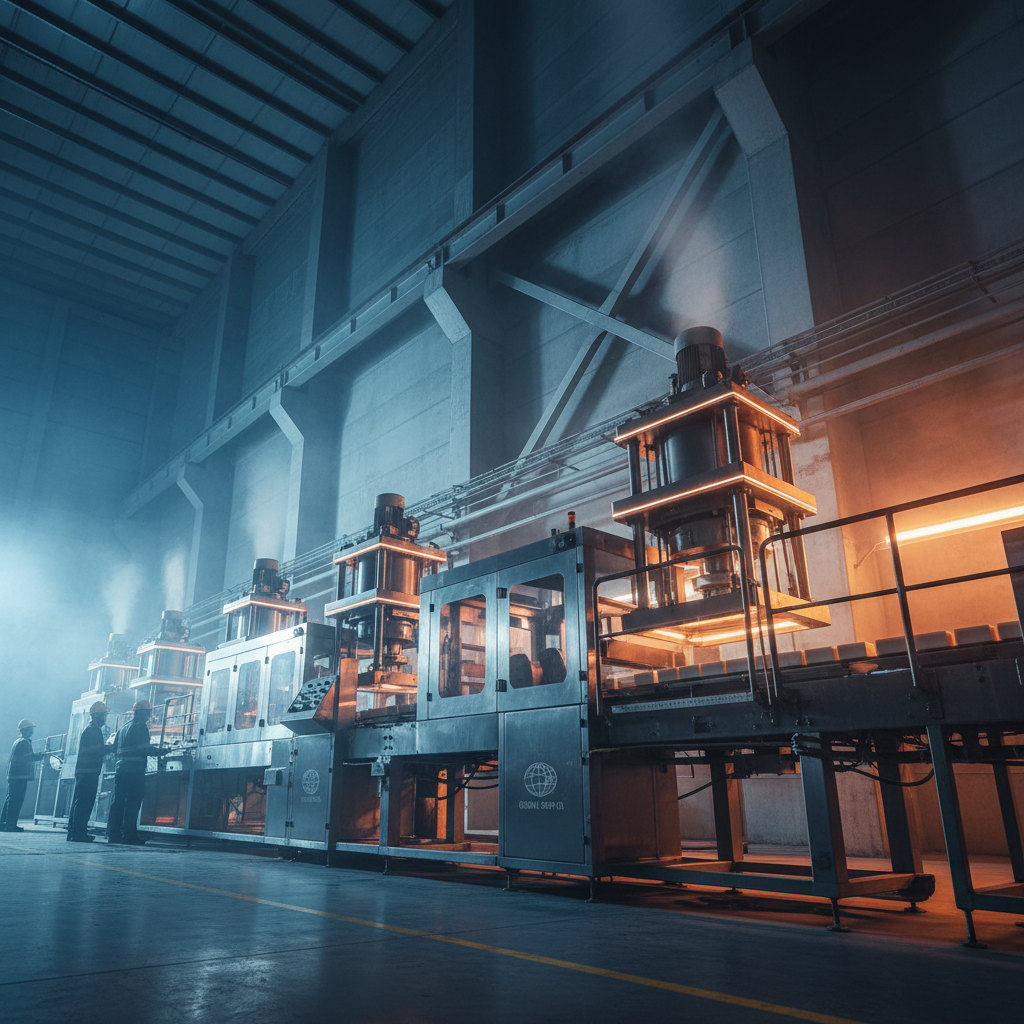

In industrial processing, managing the flow of materials between different production stages is critical for maintaining efficiency. A storage vessel designed to balance supply and demand, often referred to in technical circles as a surge tank, ensures that downstream equipment remains operational even during temporary upstream interruptions. Understanding the buffer tank price requires a look beyond the initial sticker cost to the long-term operational value it brings to a production line.
For manufacturers in the soap and chemical sectors, these systems prevent costly bottlenecks and reduce the risk of total plant shutdowns. When a twin-screw granulator or a vacuum plodder operates at high speeds, any instability in the raw material feed can lead to inconsistent product density or machine idling. By integrating a strategic holding unit, companies can stabilize their throughput and optimize the synchronization of their machinery, directly impacting the total cost of ownership and production yield.
This guide analyzes the primary factors that influence the procurement cost of industrial holding vessels, from material grades to custom engineering requirements. Readers will learn how to evaluate different specifications, identify hidden costs associated with installation, and establish a framework for choosing a supplier that balances technical precision with economic viability, ensuring the equipment fits perfectly within their existing manufacturing ecosystem.
Industrial Storage Economics
The financial commitment to industrial storage is rarely about the volume of the container alone; it is about the integrity of the process it supports. In the context of chemical and soap manufacturing, a holding tank serves as a critical decoupling point. This allows different sections of the factory—such as the refining stage and the finishing stage—to operate at their own optimal rhythms. Without this flexibility, a minor failure in one machine forces the entire line to stop, leading to massive losses in labor efficiency and energy waste.
From an engineering perspective, the value of these systems is measured by their ability to handle specific viscosities, temperatures, and corrosive agents. For instance, when dealing with soap bases, the vessel must prevent the material from cooling too quickly or settling, which might require integrated heating jackets or agitation systems. These technical additions increase the initial expenditure but drastically reduce the risk of product spoes and waste. Therefore, the perceived cost is actually an insurance policy against process instability.
Furthermore, the global supply chain for specialized machinery has shifted. Manufacturers now prioritize modularity and precision. By utilizing CNC machining for critical fittings and automated welding for the vessel body, companies can achieve higher pressure ratings and better seal integrity. This technological evolution ensures that the investment in a buffer tank price reflects a shift toward durability and lower maintenance overhead over a ten-to-fifteen-year lifecycle.
Investment Analysis for Buffer Systems
Calculating the budget for a process stabilization system involves analyzing several interdependent variables. Rather than looking for a generic quote, procurement officers should break down the requirements into material science, mechanical engineering, and operational integration. Each of these dimensions contributes differently to the final invoice and the long-term ROI of the equipment.
Cost Drivers in Manufacturing
The primary financial drivers are centered on the complexity of the build. A simple atmospheric vessel is significantly cheaper than a vacuum-rated or high-pressure chamber. In soap production, where vacuum environments are common for degassing, the vessel walls must be thicker to resist implosion, and the welding must be X-ray tested for leaks. Additionally, the precision of the inlets and outlets—often crafted via CNC machining—ensures a leak-proof connection to other machinery like granulators.
| Feature | Impact on Value | Critical Check | Buyer Question |
|---|---|---|---|
| Material Grade | High | Corrosion resistance | Is 304 or 316L stainless required? |
| Wall Thickness | Medium | Pressure rating | Does it meet ASME or ISO standards? |
| Heating Jacket | High | Temperature stability | Is steam or electric heating better? |
| Agitator Type | Medium | Mixing efficiency | Does it prevent material settling? |
| Surface Finish | Low | Contamination risk | Is an electropolished finish necessary? |
| Control System | Medium | Automation level | Is it compatible with existing PLC? |
Material Selection Impact
Material choice is the most significant variable in the pricing structure. Stainless steel is the industry standard due to its hygiene and durability. However, the difference between grade 304 and 316L can be substantial, especially when the tank stores materials with high salt content or acidic properties. Choosing a grade that is too low leads to premature pitting and failure, while an unnecessarily high grade wastes capital. A technical audit of the stored medium is essential to find the economic equilibrium.
Capacity and Throughput
Capacity planning is a balance between footprint and safety margin. A tank that is too small provides no real "buffer" during upstream delays, while one that is too large can lead to material degradation or stagnation. The cost scales non-linearly with volume; as the diameter increases, the required wall thickness to maintain structural integrity also increases, adding weight and material cost. Engineers must calculate the "worst-case" downtime to determine the ideal volume.
Thermal Management Needs
Many industrial fluids must be kept at a specific temperature to maintain viscosity. This requires the addition of insulation and heating elements. Dimple jackets or coil heaters are common additions. The cost increases based on the required heating rate and the precision of the temperature control. Poor thermal design leads to "cold spots" where material can harden, creating blockages that require expensive manual cleaning and downtime.
Installation and Integration
The "landed cost" of a vessel includes more than the factory price. Piping, valves, sensors, and structural supports must be accounted for. Integration with the rest of the production line—such as connecting to a soap refining machine—requires precise alignment. If the vessel is not designed with the factory's spatial constraints in mind, modifications on-site can double the installation cost. Modular designs that allow for easy bolting and plumbing are generally more cost-effective.
Maintenance and Lifecycle
Long-term value is found in the ease of maintenance. Vessels with accessible manholes for internal inspection and easy-to-replace seals have lower operational costs. The quality of the initial welds determines whether the tank will leak after five years of thermal cycling. Investing in a higher-quality build upfront reduces the frequency of unplanned repairs and avoids the risk of batch contamination, which can be far more expensive than the equipment itself.
Supplier Evaluation Criteria
When evaluating suppliers, buyers should look for a combination of manufacturing capacity and engineering expertise. A factory that only bends sheet metal cannot provide the same value as one with high-precision CNC machining and a professional technical team. Verification of certifications, past project experience in the soap or chemical industry, and the ability to provide customized technical support are more important indicators of quality than the lowest quote.
FAQ
What exactly is a buffer tank in a production line?
A buffer tank is a temporary storage vessel placed between two production stages. Its primary purpose is to decouple the processes, allowing the upstream machine to keep working if the downstream machine slows down or stops briefly. This prevents the entire line from crashing and ensures a consistent flow of materials, which is essential for maintaining product quality in high-volume manufacturing.
How does the material choice affect the overall cost?
Material choice is a primary cost driver. Standard carbon steel is cheapest but prone to rust. Stainless steel 304 is the common choice for general food and chemical use. Stainless 316L is more expensive but offers superior corrosion resistance for aggressive chemicals. The choice depends on the pH and corrosivity of the material being stored; using the wrong material leads to frequent replacements and potential contamination.
Is it better to buy a standard tank or a customized one?
Standard tanks are cheaper and available faster, but they often result in inefficiencies. Custom tanks are designed for your specific viscosity, temperature requirements, and factory layout. In B2B manufacturing, a customized solution usually provides a better ROI because it optimizes throughput and reduces the need for expensive adapters or modifications during installation.
What technical specifications should I check before ordering?
Key specifications include the operating pressure (vacuum or positive), the material grade, the wall thickness, the type of surface finish (e.g., mirror polished), and the heating method. You should also verify the dimensions of the nozzles and the type of seals used. Ensure the supplier provides material certificates and pressure test reports to guarantee the vessel's safety and longevity.
How do I evaluate the reliability of a machinery supplier?
Evaluate their manufacturing capabilities—do they have their own CNC centers and automatic welding lines? Check their industry experience; a supplier who understands the specific needs of soap production is more valuable than a general tank maker. Finally, look for certifications and a track record of exports to demanding markets, as this indicates a commitment to international quality standards.
Can a buffer system really reduce operational costs?
Yes, by eliminating the "ripple effect" of downtime. If a machine stops for 10 minutes, a buffer system allows the rest of the line to keep running. This maximizes labor productivity and energy efficiency. Moreover, it allows for better quality control by providing a stable feed to downstream equipment, which reduces the rate of defective products and waste.
References and further reading
- Industrial Vessel Design Standards: ASME Section VIII Division 1.
- Materials Science for Chemical Processing: Comparative analysis of 300-series stainless steels.
- Process Engineering Handbook: Principles of surge and buffer capacity in continuous manufacturing.
Related Articles